

How to Get Rid of Spider Mites on Houseplants
This article covers spider mites, including what they are, how to get rid of them on your houseplants, and more!
All about spider mites on houseplants
I don’t ever love getting any sort of pests on my plants, but it does happen. And one good thing about it is that I can get some great pictures to show you all what a certain type of pest looks like. Today we’re talking spider mites.
Not the best pest to get, but also not the worst in my opinion (that would be reserved for thrips, which I had on my monstera deliciosa years ago). In the handful of times they’ve shown up on my plants, I’ve been able to battle them effectively.
An overview of getting rid of spider mites
- Spider mites are tiny pests, nearly invisible to the naked eye, that thrive in warm, dry conditions.
- They leave small white or yellow spots on leaves by feeding on chlorophyll.
- A significant sign of their presence is the fine webbing on plant leaves.
- To treat an infested plant, first isolate it and rinse the leaves with cool water and a mild soapy solution.
- Spray the tops and bottoms of the foliage with a horticultural oil like diluted neem oil; repeat until all signs of reproduction are gone.
- Help prevent or slow infestations by boosting humidity, isolating new plants, and regularly inspecting plants for signs of pests.
What are spider mites and where do they come from?
Spider mites a very very tiny (nearly invisible to the human eye) pests that feed only on plants. The most common type of spider mite you’ll find on houseplants is the two-spotted spider mite (source: University of Minnesota Extension). They have eight legs and are arachnids closely related to spiders and ticks.
If you’re anything like me, reading that might freak you out. But don’t worry—they aren’t nasty blood suckers like ticks. And they don’t bite like true spiders do. They do have tiny mouth parts used for piercing plant cells, so they could in theory bite you. But they aren’t after humans. They’re after your plant’s sweet, sweet juices.
If you see spider mites on one of your houseplants, it can be really hard to know where they came from. You could bring them into your home in a new plant that is already has spider mites but no visible signs of them yet. They can get in through open windows and a light breeze. Or they can ride inside your home on your clothes or pets.

What plants and conditions attract spider mites?
Spider mites enjoy feasting on a wide range of plants. They like many fruit and vegetable plants, as well as flowers and shrubs like marigolds, salvia, lantana, roses, azalea, and more. As for houseplants, they are attracted to alocasia and other types of “elephant ear” plants, parlor palms, calathea, bird of paradise, and a few others. I have had spider mites on monsteras, too.
Spider mites thrive in warm, dry conditions. This is a big reason why they can be difficult to battle indoors during the colder months when we are cranking our indoor heating systems and humidity levels are lower.

How do I know if my plant has spider mites?
These pests work incredibly quickly and can destroy a plant in days. They are also mobile and can spread really fast. This is one reason why it is incredibly important to isolate and monitor all new houseplants coming into your home.
Spider mites feed on the chlorophyll in leaves. As they do so, they leave white spots on the leaves. If they are left untreated, the leaves will yellow, brown, and die. A tell-tale sign that you have spider mites is the webbing they leave on your houseplants’ leaves. At first glance, it might even look like dust.
I noticed mine on one of my alocasia while watering my plants. The affected plant had been looking worse for the wear, but I suspected it was just due to the fact that it is a picky plant (alocasia polly) and that I’d recently brought it indoors for the winter.
So I let the one affected leaf die off completely and got some pictures of it. After a few days, I noticed another leaf turning yellowish. A few days later, I took a closer look and noticed the webbing. Nooo! The next day I took the plant downstairs to isolate it.
Looking back, I can’t believe I didn’t notice the webbing! I can see it in this photo below so clearly. Hindsight is always 20/20, isn’t it?


Steps to treat infested plants
Now that you know what spider mites are and how to spot them, let’s walk through steps you can take to treat your houseplants. This is just the method I use—there are a lot of different approaches out there.
Step 1: Isolate the plant
The very first step is to isolate the plant. As spider mites are mobile, they can quickly move to surrounding plants. I would also recommend isolating any plants that were around the infested plant—especially if plant patient zero has a gnarly infestation.
Step 2: Rinse the leaves and prune
I recommend using a mixture of cool, soapy water. Dr. Brokers Sal Suds is a good all-purpose mild soap I like to keep on hand. You can use a rag to do this on larger plants. Or you can set the plant in the sink and spray it down with a spray bottle. Wipe and spray the undersides of leaves, too.
If there are any leaves that are dying off or showing serious signs of decline, I would recommend trimming them off and disposing of them immediately. Then green won’t return to the parts of the leaves the mites have affected, and you will have one fewer leaf to treat.
Step 3: Spray with a horticultural oil
Next, spray the plant down with a horticultural oil like neem oil, which is what I generally use. It has a nasty smell, but it helps smother the little buggers. As a bonus, it also gives the plant’s leaves a bit of a sheen when it dries.
Contrary to what many websites say, according to the University of California Statewide Integrated Pest Management Program, neem oil does not kill spider mites on contact. Instead, it is an insect growth regulator. It also prevents bugs from feeding and suffocates them.
If neem oil doesn’t work—or if you simply can’t stand the smell of it—you can try an over-the-counter insecticidal houseplant spray. Check that spider mites are listed on the bottle, and read the label carefully before using any pesticide.

Can I save a severely infested plant?
Yes, you can. But I recommend asking yourself if it’s worth it. If the plant has sentimental value or is expensive, or if you’re just hard-headed and hate giving up like I do, it might be worth it for you.
Some plants can be pruned all the way down and will regrow, too. This is the case for alocasia plants, which are highly vulnerable to spider mites. See a few pictures below.
I cut off all of the affected leaves…and that was all of the plant’s leaves. Then I sprayed the remaining stumps and soil with neem oil. It’s important to note that spider mites don’t live, reproduce in, or infest soil. But I didn’t want to change a stray little bugger going for a walk across the top of the soil and living through my air assault.

How to prevent spider mites from coming back
Now that you know how to get rid of spider mites, here are a few steps you can take to prevent spider mites from coming back or to prevent new spider mite infestations.
1. Repeat treatment
One treatment session is often not enough. Consider rinsing and spraying down affected plants weekly as you monitor for signs that the bugs are still reproducing. For exceptionally prone plants, you can consider spraying or rinsing off the foliage regularly to help keep the environment inhospitable to spider mites.
2. Evaluate the growing conditions
Since spider mites thrive in warm, dry conditions, avoid heat vents! Conditions in the home can get so dry in the fall, winter, and early spring. Try keeping your room a bit cooler and adding a humidifier to help keep the environment less appealing.
You can also consider putting your alocasia or other spider-mite-prone plants into a higher humidity environment like an Ikea greenhouse cabinet.
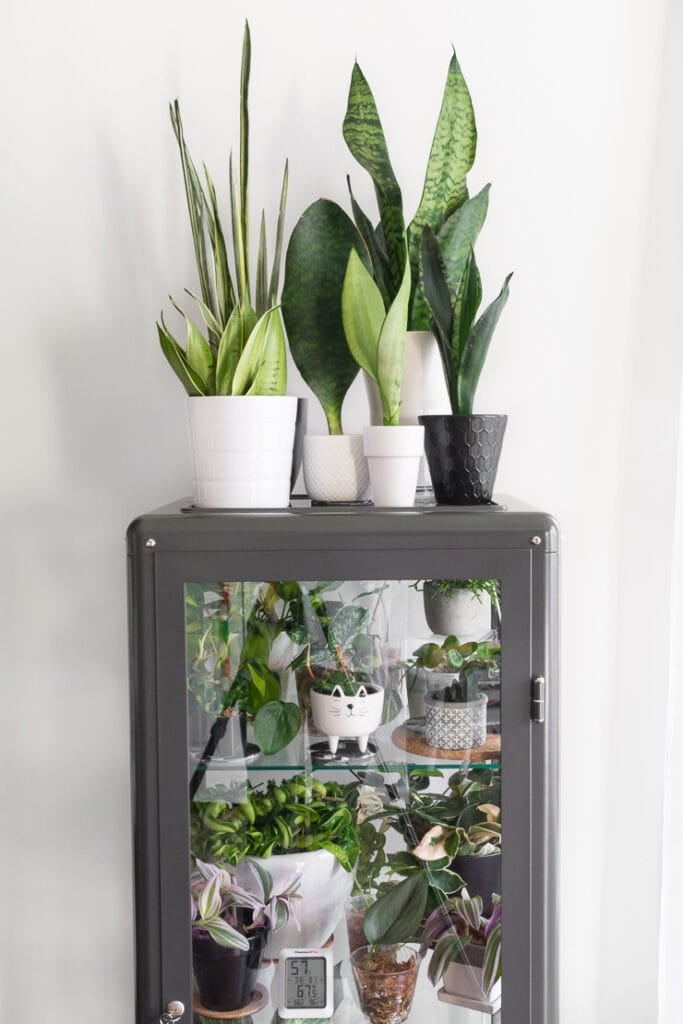
3. Try out beneficial insects
The company Nature’s Good Guys sells a variety of beneficial mites you can purchase in sachets and hang on your plants. I use these in the spring to target any larva from thrips that may have overwintered in the soil. But you can also buy beneficial mites that target and eat spider mites.
In conclusion…
Dealing with spider mites on houseplants requires a keen eye for early detection, prompt isolation, and persistent treatment. Employing methods like cool water rinses, mild soap solutions, and neem oil sprays can effectively combat these pests.
Additionally, preventive measures such as maintaining adequate humidity, avoiding hot and dry conditions, and employing beneficial insects can help to keep spider mites at bay. If you’ve had experiences with spider mites or have any tips and tricks of your own, feel free to share them in the comments below. Happy planting!
Pin my tips!



I loved this article-it is very helpful. I love Hoyas-Have 2 and one has bloomed, I even have pictures because the flower is unbelievable. Thank you
They really are! I love them!!